
Classic
A clean, sculptural line to wear with an open shirt or an evening dress.
 COHERENCE LABSStay Connected
Meet a new approach to personal thermal comfort. We're bringing neuroscience, innovative technology and beautiful design together to give you greater control over how warm or cool you feel.

You're reaching for a sweater. The person beside you is rolling up their sleeves. Neither of you is wrong.
Temperature may be shared, but comfort is personal. Yet most of the ways we manage our comfort involve changing the environment around us.
What if we could approach it differently?
A new kind of wearable, designed around the science of thermal perception.
We're developing technology that delivers targeted warming and cooling sensations at the neck, integrated into a form that looks and feels at home in your wardrobe.
Our goal is to make personal comfort less dependent on the temperature of your surroundings.
A clean, sculptural line to wear with an open shirt or an evening dress.
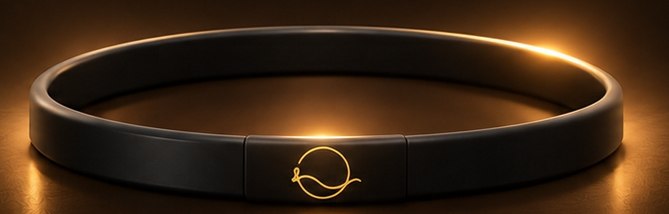
A quieter profile for a day in motion, from the morning commute to a walk home.

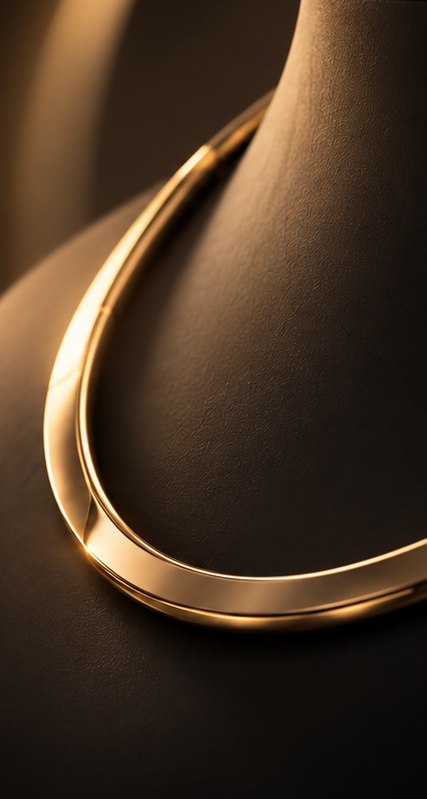
A study in texture and light that draws the collar closer to fine jewelry.
Concept imagery. Designs may change during development.
A thermostat changes the air around everyone. With the collar, we're exploring another approach. Localized warming or cooling at the neck is designed to influence how warm or cool you feel.
Imagine the first touch of a scarf on a chilly morning. This mode explores bringing a little warmth to the skin at your neck.
Think of a cool cloth on your neck in a stuffy room. This mode explores offering that local cooling sensation while the room stays as it is.

The vows are in a sunny courtyard. By the time someone taps a glass for the speeches, you're in a cool dining room. Later, on a crowded dance floor, your jacket finds the back of a chair.

You’ve come straight from a warm train. Your friend has spent all afternoon under an office vent. At dinner, the breeze from the open door is a relief to one of you. The other keeps a coat on.
You packed for the weather at your destination. Then there’s the long walk to the gate, the cool air in the cabin, and the first warm street outside the hotel. All before you’ve unpacked.

There’s a chill when you set out for a walk. An hour later, the sun has found the path. On the golf course or wandering a new neighborhood, you might welcome the shade you avoided earlier.
A thermometer can tell you the temperature of the air. Thermal sensation is how warm or cool you feel. Thermal comfort is how satisfied you are with that sensation. The same cool breeze can feel delightful or distracting.

Step out of the sun and into a shaded doorway. The air temperature might barely change, yet your skin receives less radiant heat. A breeze can also carry heat away from exposed skin. Those local changes are what temperature-sensitive nerve endings can pick up.
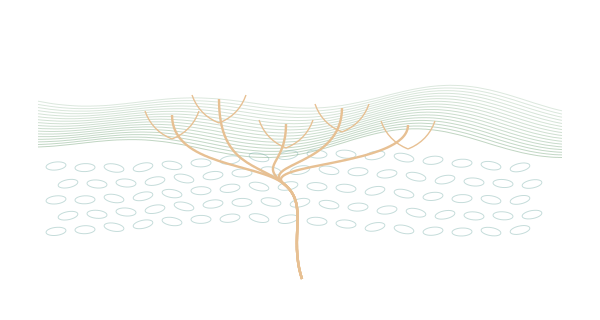
Temperature-sensitive nerve endings in the skin respond to local warming or cooling. When you touch a cool cloth, some sensory fibers change how often they fire. This is where the proposed collar would act, by changing the thermal stimulus at the skin.
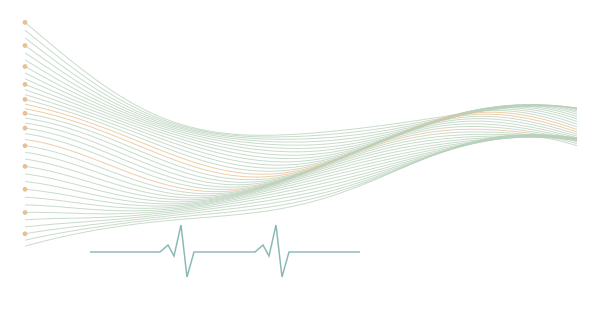
Sensory fibers carry electrical impulses from the skin. For much of the body, these signals reach the spinal cord, where other neurons relay information toward the brain. The pathways carry patterns of activity rather than a reading in degrees.

The brain brings sensory signals together. In a human imaging study, cooling the skin by different amounts was associated with different levels of activity in a region called the insula. This is one part of a wider network involved in perception.

Cool air might be a relief when you arrive on foot and a distraction once you’ve sat still for a while. Two people at the same table can bring different recent experiences, clothing and preferences to the same breeze.

Think of turning up your collar when a breeze catches your neck. In a study mapping sensitivity across the skin, participants felt brief warming and cooling at the back of the neck more strongly than at many other sites. Luo et al.
Noticing a temperature change is only part of the story. In separate experiments, whether local warming or cooling felt pleasant depended on the body region and whether the person was already warm or cold. Nakamura et al.
What we're exploring Could a small change in temperature at the skin of the neck make a shared space feel more comfortable? That is the question behind the collar. Its performance has yet to be validated.
These studies examine human perception under controlled conditions. None tested the Coherence Collar.
At Coherence Labs, we're exploring how a deeper understanding of human biology and perception can change the way we design technology.
We believe technology should complement the way we live, not demand that we adapt our lives around it. By bringing together scientific research, engineering and thoughtful design, we see opportunities to make everyday experiences more personal, intuitive and enjoyable.
We're beginning with thermal perception. But our curiosity extends much further.
Daniel Fetzner and Lauren Salminen bring business strategy and the science of human perception together at Coherence Labs.

Co-Founder & CEO
Daniel Fetzner co-founded Coherence Labs and leads its business and product strategy. His background spans technology, health information and media through work with Google, WebMD and NBC. He holds an MBA from the USC Marshall School of Business. As CEO, Daniel works with Lauren to set priorities for product development, bringing a business perspective to decisions about which ideas the company pursues and who they might serve.
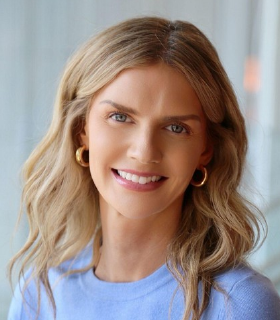
Co-Founder, President & Chief Scientific Officer
Lauren Salminen leads scientific research at Coherence Labs as its co-founder, president and chief scientific officer. She earned a PhD in psychology with a focus on behavioral neuroscience at the University of Missouri–St. Louis. An Assistant Professor of Research Neurology at the Keck School of Medicine of USC, Lauren leads NIH-funded research on air pollution and the aging brain. She brings expertise in neuroscience and neuropsychology to the company’s product decisions.
Follow our progress, discover the science behind Coherence and be among the first to hear about opportunities to experience our technology.
It’s our first wearable concept, a collar inspired by jewelry and designed around personal thermal comfort.
Temperature-sensitive nerves in your skin help you sense warmth and coolness. We’re exploring whether warming or cooling the skin at your neck could make your surroundings feel more comfortable. The collar’s performance has yet to be validated.
Core temperature regulation is outside the collar’s intended use. Its purpose is to influence how warm or cool you feel. It is not designed to protect against heat or cold illness.
The collar is in development. We haven’t announced a release date.
Classic, Sport and Couture are the three styles we’re exploring. The images show design studies. We’re still working out which styles to offer.
Recruitment hasn’t opened. If we invite people to take part, we plan to share the details through our email updates. The signup form is currently a preview.
We’re a consumer technology company bringing neuroscience, engineering and design together to explore how people experience everyday life. Our first area of study is thermal perception.